Because of you

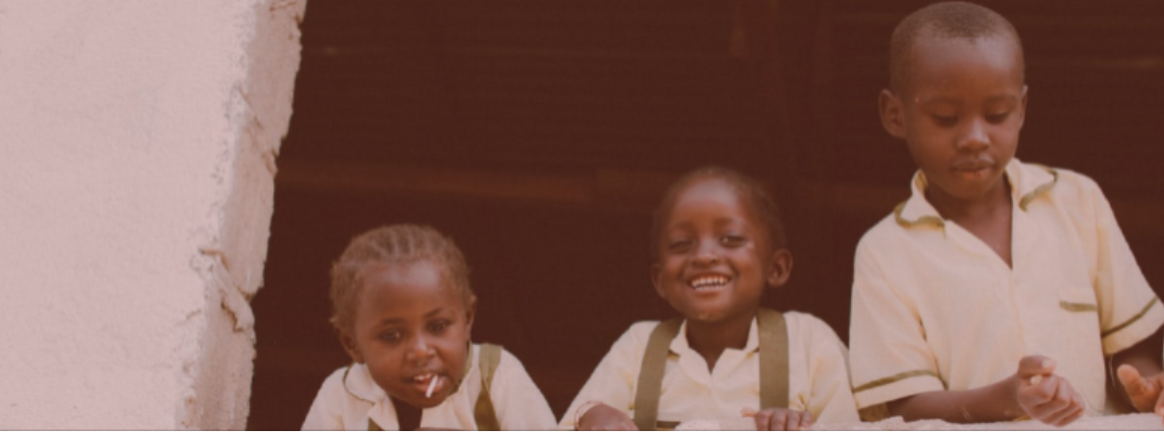
The youth of Liberia are being reached with the life-changing message of Jesus Christ.

Current ministries include the Teen X Bible Quiz competition, Operation Hannah prayer movement and participation in a radio program called Challenging Youth with a feature called Question Box where young people can ask tough questions about faith and issues.

Prayer Needs

  • Increased military, economic, and political stability in Liberia and that the leaders will seek God’s will for the country.
  • Unity and love among leaders.
  • Wisdom and funding for operations and salaries and the continuation of the radio program.
  • Increase in the prayer networks among the communities.

About Liberia

Liberia

Introduction

Settlement of freed slaves from the US in what is today Liberia began in 1822; by 1847, the Americo-Liberians were able to establish a republic. William TUBMAN, president from 1944-71, did much to promote foreign investment and to bridge the economic, social, and political gaps between the descendents of the original settlers and the inhabitants of the interior. In 1980, a military coup led by Samuel DOE ushered in a decade of authoritarian rule. In December 1989, Charles TAYLOR launched a rebellion against DOE's regime that led to a prolonged civil war in which DOE himself was killed. A period of relative peace in 1997 allowed for elections that brought TAYLOR to power, but major fighting resumed in 2000. An August 2003 peace agreement ended the war and prompted the resignation of former president Charles TAYLOR, who faces war crimes charges in The Hague related to his involvement in Sierra Leone's civil war. After two years of rule by a transitional government, democratic elections in late 2005 brought President Ellen JOHNSON SIRLEAF to power. The UN Mission in Liberia (UNMIL) maintains a strong presence throughout the country, but the security situation is still fragile and the process of rebuilding the social and economic structure of this war-torn country continues.

Geography

Location

Location: Western Africa, bordering the North Atlantic Ocean, between Cote d'Ivoire and Sierra Leone
Geographic Coordinates: 6 30 N, 9 30 W

Area

Total Area: 111,369 sq km Rank: 103
Land Area: 96,320 sq km
Water Area: 15,049 sq km
Comparison: slightly larger than Tennessee
Land Boundaries: 1,585 km
Bordering Countries: Guinea 563 km, Cote d'Ivoire 716 km, Sierra Leone 306 km
Coastline: 579 km

Climate

tropical; hot, humid; dry winters with hot days and cool to cold nights; wet, cloudy summers with frequent heavy showers

Terrain

mostly flat to rolling coastal plains rising to rolling plateau and low mountains in northeast

Elevations

Lowest Point: Atlantic Ocean 0 m
Highest Point: Mount Wuteve 1,380 m

Natural Resources

iron ore, timber, diamonds, gold, hydropower

Land Use

Arable land: 3.43%
Permanent Crops: 1.98%
Other: 94.59% (2005)
Irrigated Land: 30 sq km (2003)
Renewable Water Resources: 232 cu km (1987)
Total Freshwater withdrawal (domestic/industrial/agricultural): 0.11 cu km/yr (27%/18%/55%)
Freshwater Withdrawal Per Capita: 34 cu m/yr (2000)

Environment

Natural Hazards: dust-laden harmattan winds blow from the Sahara (December to March)
Environmental Issues: tropical rain forest deforestation; soil erosion; loss of biodiversity; pollution of coastal waters from oil residue and raw sewage
Environmental Agreements: Party to: Biodiversity, Climate Change, Climate Change-Kyoto Protocol, Desertification, Endangered Species, Hazardous Wastes, Law of the Sea, Ozone Layer Protection, Ship Pollution, Tropical Timber 83, Tropical Timber 94, Wetlands

Geography Notes

facing the Atlantic Ocean, the coastline is characterized by lagoons, mangrove swamps, and river-deposited sandbars; the inland grassy plateau supports limited agriculture

People

Population: 3,441,790 (July 2010 est.) Rank: 132

Age Structure

0-14 years: 44.1% (male 760,989/female 758,554)
15-64 years: 53% (male 904,770/female 920,704)
65 years and over: 2.8% (male 47,013/female 49,760) (2010 est.)
Median Age: 18.3 years

Population Growth

Growth Rate: 2.665% (2010 est.) Rank: 26
Birth Rate: 42.25 births/1,000 population (2010 est.) Rank: 9
Death Rate: 20.73 deaths/1,000 population (July 2010 est.) Rank: 4
Net Migration Rate: 5.13 migrant(s)/1,000 population (2010 est.) Rank: 20

Urbanization

Urban Population: 60% of total population (2008)
Rate of Urbanization: 5.6% annual rate of change (2005-10 est.)

Life and Death

Infant Mortality Rate: 138.24 deaths/1,000 live births Rank: 3
Life Expectancy at Birth: 41.84 years Rank: 220
Fertility Rate: 5.24 children born/woman (2010 est.) Rank: 11

Health and Disease

HIV/AIDS - Adult Prevalence Rate: 1.7% (2007 est.) Rank: 35
People living with HIV/AIDS: 35,000 (2007 est.) Rank: 68
HIV/AIDS Deaths: 2,300 (2007 est.) Rank: 59
Degree of Risk for Major Infectious Diseases: very high
Food or waterborne diseases: bacterial and protozoal diarrhea, hepatitis A, and typhoid fever
Vectorborne Diseases: malaria and yellow fever
Water Contact Diseases: schistosomiasis
aerosolized dust or soil contact disease: Lassa fever
Animal Contact Diseases: rabies (2009)

Nationality and Culture

Noun: Liberian(s)
Adjective: Liberian
Ethnic Groups: Kpelle 20.3%, Bassa 13.4%, Grebo 10%, Gio 8%, Mano 7.9%, Kru 6%, Lorma 5.1%, Kissi 4.8%, Gola 4.4%, other 20.1% (2008 Census)
Religion: Christian 85.6%, Muslim 12.2%, Traditional 0.6%, other 0.2%, none 1.4% (2008 Census)
Languages: English 20% (official), some 20 ethnic group languages few of which can be written or used in correspondence

Education

Literacy (Meaning, age 15 and over can read and write): 57.5% Male: 73.3% Female: 41.6% (2003 est.)
School life expectancy (primary to tertiary education): 10 years Male: 11 years Female: 8 years (2000)
Education expenditures: NA

Government

Country Name

Conventional Long Form: Republic of Liberia
Conventional Short Form: Liberia
Government Type: republic
Capital: Monrovia Geographic Coordinates: 6 18 N, 10 48 W

Administrative divisions

15 counties; Bomi, Bong, Gbarpolu, Grand Bassa, Grand Cape Mount, Grand Gedeh, Grand Kru, Lofa, Margibi, Maryland, Montserrado, Nimba, River Cess, River Gee, Sinoe
Independence: 26 July 1847
National holiday: Independence Day, 26 July (1847)
Constitution: 6 January 1986
Legal system: dual system of statutory law based on Anglo-American common law for the modern sector and customary law based on unwritten tribal practices for indigenous sector; accepts compulsory ICJ jurisdiction with reservations
Suffrage: 18 years of age; universal

Executive Branch

Chief of State: President Ellen JOHNSON SIRLEAF (since 16 January 2006); note - the President is both the chief of state and head of government
Head of Government: President Ellen JOHNSON SIRLEAF (since 16 January 2006)
Cabinet: Cabinet appointed by the president and confirmed by the Senate
Elections: president elected by popular vote for a six-year term (eligible for a second term); election last held on 8 November 2005 (next to be held in October 2011)
Election Results: Ellen JOHNSON SIRLEAF elected president; percent of vote, second round - Ellen JOHNSON SIRLEAF 59.6%, George WEAH 40.4%

Legislative Branch

bicameral National Assembly consists of the Senate (30 seats; note - number of seats changed in 11 October 2005 elections; members elected by popular vote to serve nine-year terms) and the House of Representatives (64 seats; members elected by popular vote to serve six-year terms)
Elections: Senate - last held on 11 October 2005 (next to be held in October 2011); House of Representatives - last held on 11 October 2005 (next to be held in October 2011)
Election Results: Senate - percent of vote by party - NA; seats by party - COTOL 7, NPP 4, CDC 3, LP 3, UP 3, APD 3, other 7; House of Representatives - percent of vote by party - NA; seats by party - CDC 15, LP 9, COTOL 8, UP 8, APD 5, NPP 4, other 15; note - the UP now holds 13 out of 30 senate seats and 16 out of 64 house seats following a merger with several smaller parties in 2009
Note: junior senators - those who received the second most votes in each county in the 11 October 2005 election - will only serve a six-year first term because the Liberian constitution mandates staggered Senate elections to ensure continuity of government; all senators will be eligible for nine-year terms thereafter

Judicial branch

Supreme Court

Politics

Political Parties and Leaders: Alliance for Peace and Democracy or APD [Togba-na TIPOTEH]; Coalition for the Transformation of Liberia or COTOL [H. Varney SHERMAN]; Congress for Democratic Change or CDC [George WEAH]; Liberty Party or LP [Charles BRUMSKINE]; National Patriotic Party or NPP [Roland MASSAQUOI]; Unity Party or UP [Ellen JOHNSON SIRLEAF]
Political pressure groups and leaders: demobilized former military officers
International Organization Participation: ACP, AfDB, AU, ECOWAS, FAO, G-77, IAEA, IBRD, ICAO, ICCt, ICRM, IDA, IFAD, IFC, IFRCS, ILO, IMF, IMO, IMSO, Interpol, IOC, IOM, IPU, ISO (correspondent), ITU, ITUC, MIGA, NAM, OPCW, UN, UNCTAD, UNESCO, UNIDO, UPU, WCO, WFTU, WHO, WIPO, WMO, WTO (observer)
Flag Description: 11 equal horizontal stripes of red (top and bottom) alternating with white; a white five-pointed star appears on a blue square in the upper hoist-side corner; the stripes symbolize the signatories of the Liberian Declaration of Independence; the blue square represents the African mainland, and the star represents the freedom granted to the ex-slaves; according to the constitution, the blue color signifies liberty, justice, and fidelity, the white color purity, cleanliness, and guilelessness, and the red color steadfastness, valor, and fervor
Note: the design is based on the US flag

Economy

Economy Overview: Civil war and government mismanagement destroyed much of Liberia's economy, especially the infrastructure in and around the capital, Monrovia. Many businesses fled the country, taking capital and expertise with them, but with the conclusion of fighting and the installation of a democratically-elected government in 2006, several have returned. Liberia has the distinction of having the highest ratio of direct foreign investment to GDP in the world. Richly endowed with water, mineral resources, forests, and a climate favorable to agriculture, Liberia had been a producer and exporter of basic products - primarily raw timber and rubber. Local manufacturing, mainly foreign owned, had been small in scope. President JOHNSON SIRLEAF, a Harvard-trained banker and administrator, has taken steps to reduce corruption, build support from international donors, and encourage private investment. Embargos on timber and diamond exports have been lifted, opening new sources of revenue for the government. The reconstruction of infrastructure and the raising of incomes in this ravaged economy will largely depend on generous financial and technical assistance from donor countries and foreign investment in key sectors, such as infrastructure and power generation.

Gross Domestic Product

GDP (purchasing power parity): $1.578 billion (2009 est.) Rank: 190
GDP - real growth rate: 4.6% (2009 est.) Rank: 35
GDP - per capita (PPP): $400 (2009 est.) Rank: 225
GDP - Composition by Sector: Agriculture: 76.9% Industry: 5.4% Services: 17.7% (2002 est.)

Labor Force

Labor Force: 1.372 million (2007) Rank: 133
Labor force - by occupation: Agriculture: 70% Industry: 8% Services: 22% (2000 est.)
Unemployment Rate: 85% (2003 est.) Rank: 197

Poverty

Population below poverty line: 80% (2000 est.)

Transnational Issues

International Disputes: although civil unrest continues to abate with the assistance of 18,000 UN Mission in Liberia (UNMIL) peacekeepers, as of January 2007, Liberian refugees still remain in Guinea, Cote d'Ivoire, Sierra Leone, and Ghana; Liberia, in turn, shelters refugees fleeing turmoil in Cote d'Ivoire; despite the presence of over 9,000 UN forces (UNOCI) in Cote d'Ivoire since 2004, ethnic conflict continues to spread into neighboring states who can no longer send their migrant workers to Ivorian cocoa plantations; UN sanctions ban Liberia from exporting diamonds and timber
Refugees and internally displaced persons - refugees (country of origin): 12,600 (Cote d'Ivoire)
International Displaced Persons: 13,000 (civil war from 1990-2004; IDP resettlement began in November 2004) (2007)

Want to know more? Show Full Profile